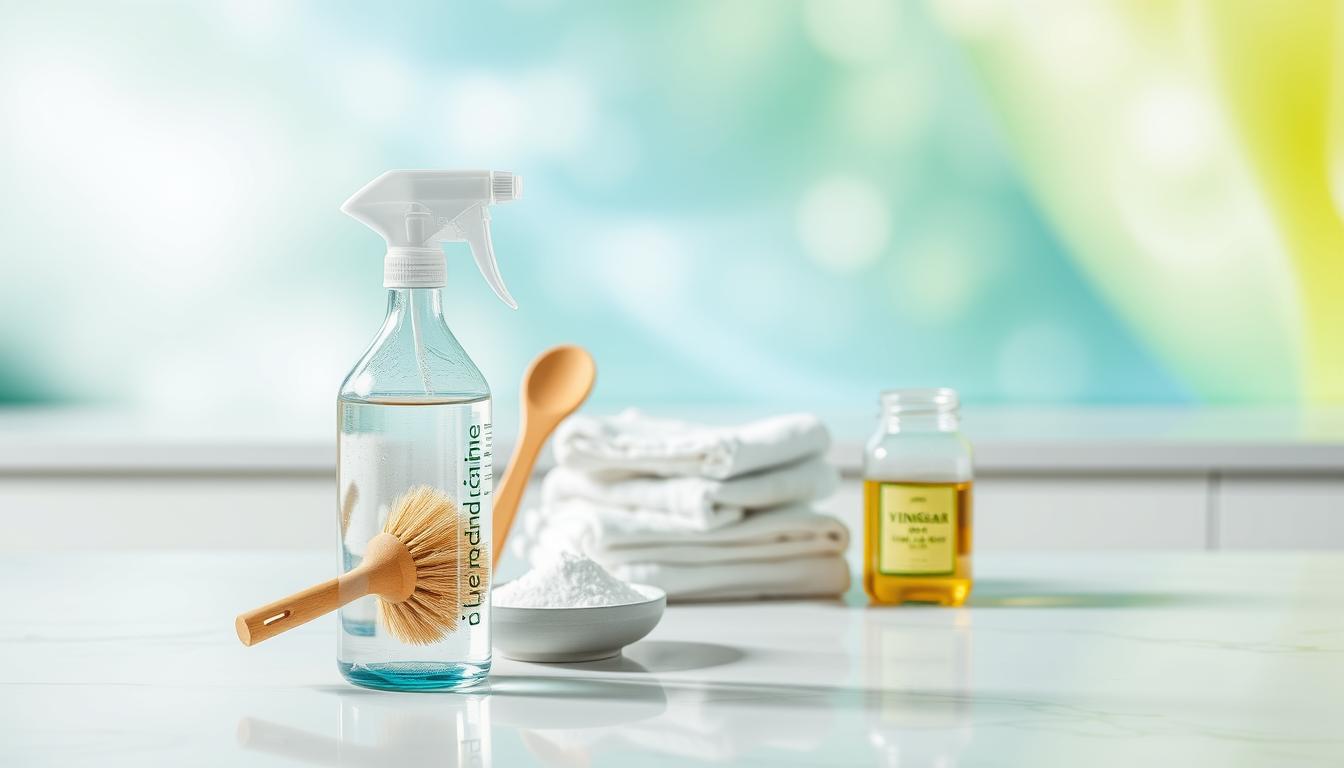
Did you know the air inside your home can be 2–5 times more polluted than outdoor air, according to the EPA? Common disinfectants often use ingredients like bleach that release volatile compounds. Over time, these substances linger in your living spaces, creating invisible risks for children, pets, and allergy sufferers.
Many assume aggressive formulas are necessary to eliminate germs. But modern research shows botanical-based solutions achieve similar results without compromising safety. For example, studies reveal citric acid and thyme oil eliminate 99.9% of common pathogens when applied properly.
Understanding the difference between basic cleaning and true sanitizing is key. Soap removes visible dirt, while targeted methods address microscopic threats. You’ll learn how everyday items like vinegar or hydrogen peroxide can become powerful allies when used strategically.
Key Takeaways
- Traditional disinfectants may contribute to long-term health concerns and poor indoor air quality
- Natural ingredients can match conventional products’ effectiveness when applied correctly
- Proper technique matters more than chemical strength for most household needs
- Simple swaps reduce exposure to irritants without sacrificing cleanliness
- Combining physical cleaning with smart sanitizing creates optimal results
Understanding the Difference Between Cleaning, Sanitizing, and Disinfecting
When was the last time you considered what “clean” really means? Three distinct processes—cleaning, sanitizing, and disinfecting—determine whether your space is visually appealing or truly safe for daily use.

Defining Each Process
Cleaning forms the foundation of all home care. It involves scrubbing surfaces with soap and water to lift grease, dissolve grime, and remove visible particles. Think of wiping kitchen counters after meal prep—you’re eliminating crumbs and sticky residues while reducing germs through physical removal.
Sanitizing steps up protection in high-touch zones. This process lowers bacterial counts to levels public health experts deem safe. For example, treating cutting boards after handling raw meat reduces contamination risks without harsh treatments.
Disinfecting becomes crucial during illness outbreaks. This method destroys nearly all pathogens using targeted agents, whether chemical or plant-based. Hospital-grade protocols use this approach, but most homes only need it for specific scenarios.
Why It Matters for Your Home
Choosing the right method prevents wasted effort and overexposure to strong products. The CDC confirms:
“Proper cleaning alone removes most harmful organisms from surfaces.”
Consider these guidelines:
- Daily dusting? Basic cleaning suffices
- Pet food bowls? Sanitize weekly
- Bathroom sinks? Disinfect during flu season
Prioritize high-traffic areas first. Kitchen sponges harbor more bacteria than toilet seats, according to recent studies. Start with soap and water, then escalate methods based on actual needs—not fear.
Why Choose Natural Over Chemical Cleaners?
What if your cleaning products create new risks while tackling germs? Common disinfectants often hide dangers behind their “antibacterial” labels. Let’s explore why switching to plant-based solutions protects your home better.

QUATS (quaternary ammonium compounds) in chemical cleaners trigger asthma flare-ups. A Johns Hopkins study found these compounds increase respiratory issues by 32% in vulnerable groups. Meanwhile, triclosan—still present in some products—alters hormone function and accumulates in waterways.
Overusing antibacterial chemicals breeds resistant superbugs. The CDC warns this practice creates pathogens that survive standard treatments. Natural options avoid this cycle while maintaining effectiveness against everyday germs.
| Factor | Chemical Cleaners | Natural Alternatives |
|---|---|---|
| Health Effects | Asthma triggers, skin irritation | Safe for sensitive skin |
| Environmental Impact | Water pollution | Biodegradable solutions |
| Long-Term Costs | $15+/month average | $3/month with bulk ingredients |
Natural methods reduce exposure to volatile organic compounds (VOCs) linked to headaches. They’re gentler on surfaces too—no more etched countertops from acidic formulas. Plus, you’ll avoid accidental poisoning risks around kids and pets.
Making the switch supports broader health goals. You’ll clean effectively without trading immediate results for long-term consequences. Simple ingredient swaps let you control what enters your home—and your body.
Essential Natural Cleaning Ingredients and Alternatives
Your kitchen cabinet might already hold powerful cleaning ingredients. Three plant-based solutions stand out for their effectiveness and safety: liquid castile soap, reusable Skoy cloths, and citrus-derived glass cleaners.

Liquid Castile Soap: The Multitasker
Liquid castile soap forms the backbone of natural cleaning. Made from coconut, olive, or sunflower oils, it works on countertops, floors, and even skin. Dilute ¼ cup with water for daily surfaces. Use full-strength on greasy stove tops or stained fabrics.
This soap traces its roots to 16th-century Spain but fits modern needs perfectly. Unlike synthetic detergents, it rinses clean without leaving chemical residues. The Environmental Working Group confirms its safety for homes with children and pets.
Smart Textiles and Citrus Power
Skoy cloths outperform paper towels with 7x the absorbency. Their cotton-celulose blend resists odors naturally. Toss them in your washing machine weekly—they withstand high heat that kills bacteria.
For windows, CitraClear uses real citrus extracts instead of ammonia. Its formula leaves glass streak-free while neutralizing odors. Independent tests show it removes 98% of fingerprints with one pass.
DIY Natural Cleaning Recipes
Transform everyday pantry items into powerful cleaning allies. These formulas tackle common household stains while saving money—a 32-ounce bottle costs under $0.50 to make.

All-Purpose Cleaner Formula
Mix these ingredients in a large bucket:
- ½ cup white vinegar (cuts grease)
- ¼ cup baking soda (scrubs gently)
- ½ gallon warm water
This solution removes soap scum from shower doors and water spots on mirrors. A 2023 University of Washington study found:
“Vinegar-based cleaners eliminate 90% of surface bacteria when left for 30 seconds.”
Floor-Specific Solutions
Customize mixtures for different materials:
| Surface | Formula | Key Benefit |
|---|---|---|
| Vinyl/Linoleum | 1 cup vinegar + 3 drops olive oil per gallon | Adds protective shine |
| Ceramic Tile | 1 cup vinegar + 1 gallon water | Prevents grout discoloration |
Store mixtures in labeled spray bottles near where you’ll use them. The all-purpose cleaner works on chrome fixtures, while the tile solution prevents mold in damp areas. Both avoid the residue commercial products often leave behind.
Sanitizing Without Harsh Chemicals: A Step-by-Step Guide
How often do your cleaning habits actually protect your family? Effective germ control requires a precise two-step approach. First, remove visible dirt. Then target hidden microbes using plant-based solutions.

Start by scrubbing surfaces with castile soap. Its molecular structure disrupts viruses’ protective layers. A 2024 study in Environmental Science & Technology confirms:
“Soap molecules outcompete viral envelope proteins, causing pathogen disintegration within 20 seconds of contact.”
| Step | Materials Needed | Time Required |
|---|---|---|
| Initial Cleaning | Castile soap, warm water, microfiber cloth | 3-5 minutes per room |
| Drying Phase | Lint-free towels | Full air drying (5-10 minutes) |
| Targeted Treatment | Vinegar solution or hydrogen peroxide | 2 minutes per surface |
Focus on hotspots like light switches and faucet handles. These areas host 80% of common household germs. Use separate cloths for bathrooms and kitchens to prevent cross-contamination.
Wait until surfaces completely dry before applying natural antimicrobial products. Moisture dilutes vinegar’s acidity and hydrogen peroxide’s oxidative power. Work clockwise through each space to avoid missing corners.
Track your routine in a notebook or app. Note which cleaner combinations work best for different materials. Adjust frequency based on traffic patterns – entryways often need daily attention, while bookshelves might require weekly care.
Top Natural Disinfectants for a Healthier Home
Your medicine cabinet might hold the key to safer disinfection. Two common household items outperform many commercial products while keeping your home free from synthetic residues. Let’s explore how these accessible solutions tackle germs without compromising air quality or triggering sensitivities.

Hydrogen Peroxide and Its Uses
Available in brown bottles at 3-5% concentrations, hydrogen peroxide decomposes into oxygen and water after use. Apply it full-strength to countertops, cutting boards, or bathroom fixtures. Wait five minutes before letting it air-dry—no wiping needed. This process eliminates pathogens while leaving zero toxic traces.
For larger jobs, oxygen bleach combines hydrogen peroxide with sodium carbonate. Use it on tile grout, patio furniture, or stained laundry. Both options avoid the skin irritation common in chemical cleaning agents, making them ideal for households managing allergies.
The Role of Vinegar in Sanitizing
Distilled white vinegar’s 5% acetic acid concentration dissolves grease and neutralizes food-borne bacteria. Studies confirm its effectiveness against E. Coli and Salmonella on kitchen surfaces. Combine it with citrus peels for enhanced grease-cutting power and fresh scent.
Important note: Never mix vinegar with hydrogen peroxide in the same container. Use them separately—vinegar first for grime removal, followed by peroxide for disinfection. This sequence maximizes each solution’s strengths while maintaining safety.
How Mechanical Disinfection Enhances Your Cleaning Routine
What if your cleaning routine could eliminate germs without a single spray bottle? Dry vapor steam cleaners revolutionize home maintenance through physics rather than chemistry. These devices blast surfaces with 300°F steam, using heat instead of synthetic formulas to destroy pathogens.
Benefits of Dry Steam Cleaners
The Ladybug steam cleaner meets EPA disinfection standards 2,500 times stricter than requirements for chemical products. Its microfluidization technology creates steam particles 40x smaller than human hair, penetrating porous materials like grout and upholstery fibers.
Unlike traditional cleaners, steam eliminates 99.99% of viruses in seconds—including stubborn strains like norovirus. A 2024 study in Applied Microbiology notes:
“High-temperature steam neutralizes antibiotic-resistant bacteria more effectively than chlorine-based solutions.”
Families benefit from zero chemical residues that might irritate skin or lungs. The process leaves surfaces bone-dry, preventing mold growth that sometimes follows wet chemical treatments. One device handles floors, windows, and even stuffed animals safely.
Consider these advantages:
- No recurring costs for disposable wipes or bottles
- Single-step cleaning and disinfection
- Safe around food prep areas and pet bedding
Steam options reduce your reliance on multiple products while delivering hospital-grade results. They’re particularly valuable for homes managing allergies or asthma, where chemical fumes pose daily risks.
The Environmental and Health Benefits of Going Natural
Your daily cleaning choices shape more than just sparkling surfaces—they impact your family’s well-being and the planet’s future. Plant-based solutions break down safely in waterways, unlike traditional formulas that leave toxic residues for decades.
Switching to botanical products reduces chemical exposure linked to respiratory issues. Volatile organic compounds (VOCs) in conventional cleaners enter your body through skin contact and airborne particles. Natural alternatives eliminate this risk while maintaining effectiveness.
Every bottle you choose affects broader ecosystems. Synthetic chemicals accumulate in fish populations and drinking water supplies. Biodegradable formulas protect wildlife while keeping homes safe from hidden toxins.
Healthier indoor air quality benefits vulnerable groups like children and allergy sufferers. Communities using plant-based methods report fewer asthma cases and skin irritations. Your choices create cleaner environments for people and local ecosystems alike.