Did you know 48 million Americans experience foodborne illness annually? That’s 1 in 6 people facing preventable sickness from everyday meals. While most recover quickly, 128,000 require hospitalization each year – and some develop lasting kidney failure or chronic arthritis.
Your cooking space holds surprising dangers if basic precautions get overlooked. Raw chicken juices contaminating salad greens. Leftovers left too long on counters. These common mistakes create breeding grounds for harmful bacteria like Salmonella and E. coli.
The solution lies in four essential actions: clean surfaces thoroughly, separate raw and cooked items, cook to safe temperatures, and chill perishables promptly. Mastering these practices reduces your family’s risk by up to 75% according to food safety experts.
Key Takeaways
- Foodborne illnesses hospitalize someone every 4 minutes in the US
- Proper food handling prevents 75% of contamination risks
- Kitchen surfaces can harbor 200x more bacteria than toilet seats
- Dangerous pathogens multiply fastest between 40°F-140°F
- Color-changing meat thermometers ensure safe cooking temperatures
Understanding Food Poisoning Risks
Your next meal could harbor invisible threats that trigger stomach cramps within hours. Harmful germs thrive when basic safety steps get skipped, transforming everyday ingredients into health hazards.

How Food Poisoning Occurs
Bacteria multiply fastest between 40°F and 140°F – the danger zone where leftovers become risky after two hours. Contaminated food often looks and smells normal, hiding dangerous germs like Salmonella. Cross-contamination spreads these pathogens when raw meat juices touch ready-to-eat items.
Your immune system usually fights minor invasions, but overwhelming bacterial loads cause nausea and diarrhea. Symptoms typically strike 2-6 hours after eating and last 1-2 days. High-risk groups like children face greater complications.
Common Foodborne Pathogens and Their Effects
Over 250 types of foodborne illnesses exist, each with unique dangers. Salmonella causes 1.35 million U.S. infections yearly, often from undercooked poultry. E. coli outbreaks frequently link to unwashed produce or raw milk.
| Pathogen | Common Sources | Symptoms | Prevention |
|---|---|---|---|
| Salmonella | Raw eggs, poultry | Fever, cramps | Cook to 165°F |
| E. coli | Unpasteurized juice | Bloody diarrhea | Wash produce |
| Campylobacter | Undercooked meat | Joint pain | Separate raw foods |
Proper cooking destroys most bacteria, but some produce toxins that heat can’t eliminate. Refrigerating leftovers within two hours stops germ growth. Use thermometers to verify safe temperatures for different foods.
Clean: Washing Hands, Utensils, and Surfaces
Your kitchen tools can become invisible carriers of harmful germs if not cleaned properly. Effective cleaning breaks the chain of contamination, stopping pathogens before they reach your plate. Three key practices form your defense system against microscopic threats.

Proper Hand Washing Techniques
Scrub for 20 seconds using plain soap and water – about the time it takes to hum “Happy Birthday” twice. Focus on fingernails, knuckles, and between fingers where germs hide. Always rinse under running water with hands pointed downward to prevent recontamination.
Wash hands before touching any ingredients and immediately after handling raw animal products. This simple step removes up to 90% of harmful bacteria according to CDC studies. Skip antibacterial soaps – they offer no extra protection and may contribute to antibiotic resistance.
Sanitizing Kitchen Surfaces and Utensils
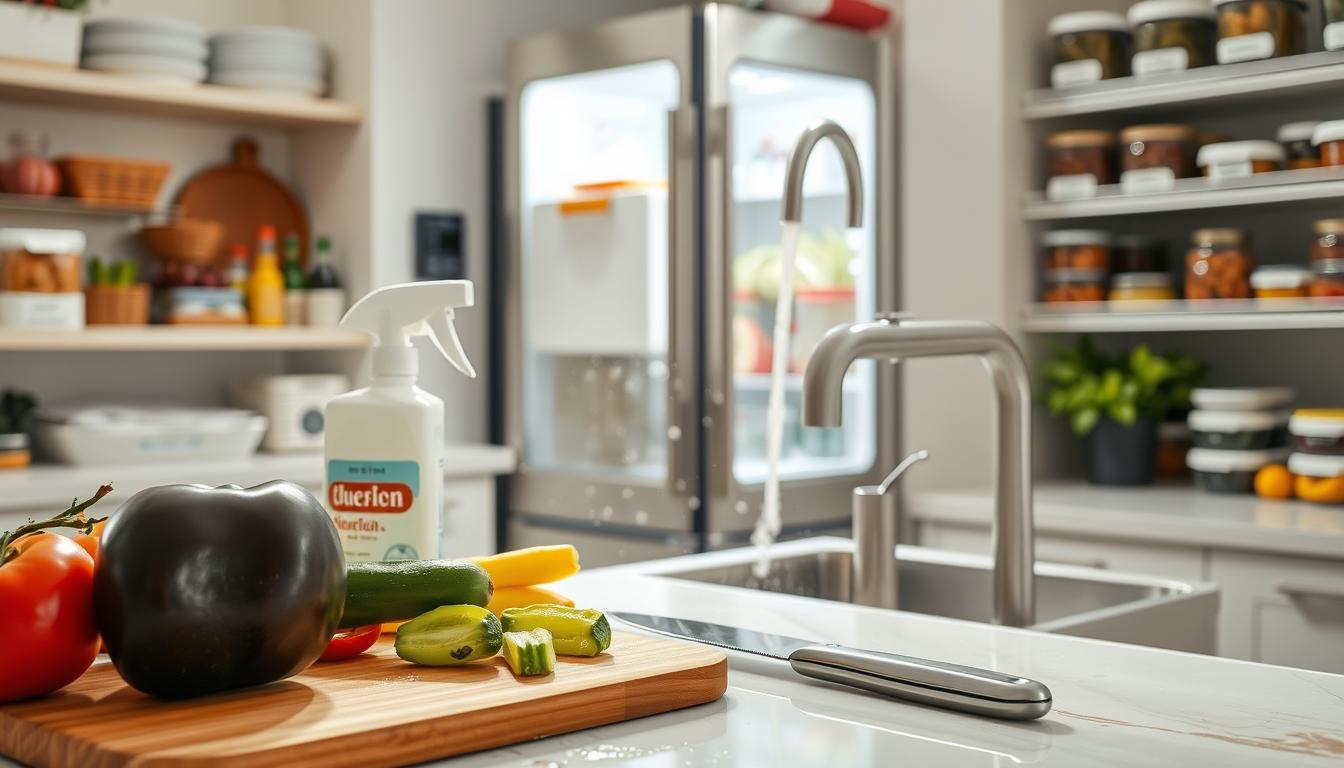
Clean countertops and tools with hot, soapy water after preparing each food item. Pay special attention to knife handles, blender buttons, and faucet levers – often overlooked hotspots. For extra protection, sanitize surfaces with a solution of 1 tablespoon bleach per gallon of water.
Replace sponges weekly and dish towels daily. Studies show kitchen cloths harbor more bacteria than bathroom surfaces when reused multiple times. Run dishcloths through your washing machine’s hot cycle with bleach alternative detergents.
Effective Cleaning Practices for Cutting Boards
Use separate boards for raw meats and ready-to-eat foods. Plastic boards withstand dishwasher sanitizing cycles, while wooden boards require manual scrubbing with coarse salt and lemon juice. Replace any board with deep grooves that trap bacteria.
Rinse produce under cool running water before peeling or cutting. Gently rub firm-skinned fruits and vegetables with a clean brush. Pat dry with paper towels to remove remaining contaminants.
Separate: Preventing Cross Contamination
The path from grocery bag to dinner plate hides invisible risks that demand smart separation strategies. Proper organization blocks harmful bacteria from jumping between ingredients – a critical defense against kitchen-borne illnesses.

Cutting Board Mastery
Designate specific tools for different tasks. Use color-coded cutting boards to eliminate guesswork: red for raw meat, green for vegetables, blue for seafood. Plastic boards handle animal products best since they survive dishwasher sterilization cycles.
Never reuse plates that held raw poultry or eggs. Juices containing Salmonella can transfer to cooked foods during serving. Keep dedicated utensils for flipping burgers or turning chicken to avoid reintroducing germs.
Smart Storage Solutions
Store raw proteins in leak-proof containers on refrigerator bottom shelves. This prevents accidental drips onto produce or dairy items. Follow this storage hierarchy:
| Food Type | Cutting Board | Storage Location |
|---|---|---|
| Raw meat | Red plastic | Bottom shelf |
| Poultry | Red plastic | Sealed container |
| Seafood | Blue plastic | Ice-packed tray |
| Produce | Green wood | Crisper drawer |
At the store, bag raw meats separately using plastic produce bags. Place eggs in their original carton – the dated packaging helps track freshness. Skip rinsing chicken; proper cooking destroys surface bacteria better than water splashes.
Replace worn boards with deep grooves where germs hide. Establish a “raw zone” in your kitchen workflow to contain potential contamination. These spatial separations create physical barriers against invisible threats.
Cook: Achieving Safe Internal Temperatures
That sizzling steak might look ready, but appearances can deceive—deadly bacteria don’t change color when heated. Color and texture lie. Pink hamburger centers or clear chicken juices provide false confidence. Only precise heat measurement protects your plate.

Mastering Your Food Thermometer
Insert the probe into the thickest part of meats, avoiding bones and fatty areas. For thin cuts like burgers, angle the thermometer sideways. Digital models give fastest readings—wait 10-15 seconds for accuracy.
“Guessing doneness is Russian roulette with your gut,” says USDA food safety specialist Dr. Emily Carter. “Thermometers remove the gamble.” Calibrate devices monthly using ice water (32°F) or boiling water (212°F at sea level).
Heat Targets for Common Foods
| Food Type | Minimum Temp | Rest Time |
|---|---|---|
| Beef steaks | 145°F | 3 minutes |
| Ground meats | 160°F | None |
| Chicken breasts | 165°F | None |
| Fish fillets | 145°F | Until flaky |
Ground meats need higher temps because grinding spreads surface bacteria throughout. Let roasts and steaks rest after cooking—heat continues destroying pathogens during this period. Reheat leftovers to 165°F regardless of original cooking method.
Your oven’s “done” button? Useless. Pre-programmed timers ignore actual internal temperatures. Take charge with manual checks in multiple spots. Food safety isn’t about recipes—it’s about verified science.
Chill: Correctly Refrigerating and Freezing Foods
Your refrigerator acts as a bacterial gatekeeper—but only when used correctly. Temperature control forms your primary defense against invisible threats multiplying in leftovers and raw ingredients. Strategic chilling slows pathogen growth while preserving freshness.

Proper Refrigeration and Freezing Techniques
Perishables need rapid cooling. Store cooked meals in shallow containers no deeper than 2 inches—this cuts cooling time by 75% compared to deep pots. Set your fridge to 40°F or lower, using an appliance thermometer if your unit lacks a built-in display.
Freezers perform best at 0°F. “Bacteria enter hibernation below freezing but reactivate during thawing,” notes USDA food safety specialist Mark Roberts. Package meats in moisture-proof wraps to prevent freezer burn. Follow these storage timelines:
| Food Type | Max Storage Time (Fridge) | Max Storage Time (Freezer) |
|---|---|---|
| Raw chicken | 1-2 days | 9 months |
| Cooked rice | 4-6 days | 6 months |
| Ground beef | 1-2 days | 3-4 months |
Safe Thawing Practices for Frozen Foods
Never defrost items on counters. Use three approved methods:
- Refrigerator thawing: Plan ahead—24 hours per 5 pounds
- Cold water baths: Change water every 30 minutes
- Microwave defrosting: Cook immediately after
Leftovers left unrefrigerated for over two hours (one hour in hot environments) become hazardous. When in doubt, throw it out—Salmonella doesn’t alter smells or flavors. Your vigilance creates an invisible shield against foodborne threats.
Key Strategies for Avoiding Food Poisoning at Home
Your kitchen becomes a fortress when these four defenses work together. The clean-separate-cook-chill system creates overlapping shields against invisible threats. Each step reinforces the others, closing gaps where harmful organisms might slip through.
Start by establishing daily checkpoints. Designate cleaning stations with color-coded cloths for surfaces and tools. Create a “raw zone” using specific counter areas and storage containers. This spatial organization reduces cross-contact risks while cooking.
Build fail-safes into meal preparation routines:
| Step | Daily Action | Protection Boost |
|---|---|---|
| Clean | Sanitize phones/tablets | Removes 93% of germs |
| Separate | Use sealed marinade containers | Blocks juice leaks |
| Cook | Test thermometer accuracy weekly | Ensures proper heating |
| Chill | Label leftovers with dates | Prevents expired storage |
Busy weeknights need smart shortcuts. Pre-chill serving platters for hot dishes. Keep disinfectant wipes near prep areas for quick cleanups. Teach family members the “first in, first out” fridge rotation rule during grocery unpacking.
Identify system weaknesses through monthly audits. Check refrigerator temperatures and cutting board conditions. Update practices seasonally – summer picnics demand ice-packed coolers, while holiday feasts require expanded storage plans.
These layered methods transform basic precautions into an automatic safety net. Consistent use reduces food poisoning risks by creating multiple checkpoints against contamination. Your household becomes a team working toward shared food safety goals.
Special Considerations: Handling Raw and Cooked Foods
Raw ingredients demand careful handling to keep meals safe. Different rules apply when working with uncooked proteins versus prepared dishes. Smart practices create clear boundaries between these food groups.
Managing Raw Meat, Poultry, and Seafood
Store raw meat in leak-proof containers on your fridge’s bottom shelf. Use separate knives for chicken and seafood to prevent cross-contact. Thaw frozen poultry in the refrigerator – never on counters where juices can spread.
Marinate meats in sealed bags instead of open bowls. Discard used marinades immediately. Cook eggs until yolks firm up – runny preparations risk salmonella exposure.
Best Practices for Handling Cooked and Ready-to-Eat Items
Use clean tongs for serving grilled chicken or fish. Never place baked goods on surfaces that held uncooked meat. Refrigerate sliced fruits within two hours – cut surfaces invite bacterial growth.
Keep deli meats away from raw burger patties in shopping carts. Wash hands after touching packaging from fresh poultry. Reheat leftovers to 165°F to neutralize any lingering threats.
These strategies form your final defense against poisoning risks. Consistent separation protects your meals from farm to fork.