Did you know the same process that spreads ink through water also governs how oxygen enters your bloodstream? This invisible force—responsible for molecular movement in countless systems—becomes strikingly visible when observed in everyday materials. Using simple kitchen ingredients, you can unlock a fundamental principle shaping everything from environmental processes to biological functions.
When substances naturally migrate from crowded zones to sparse regions, they follow rules you can see and measure. A transparent, jelly-like substance provides the perfect stage for this display. Its structure prevents swirling currents, letting pure molecular behavior take center stage.
This experiment isn’t just about watching colors bloom. It mirrors how pollutants disperse underground or nutrients cross cell membranes. By tracking vibrant particles in a stable medium, you’ll grasp concepts scientists use to model everything from drug delivery systems to ecosystem health.
Key Takeaways
- Observe molecular movement principles through visible, hands-on experimentation
- Discover why specific materials eliminate interference for accurate observation
- Connect lab results to environmental and biological processes
- Learn how concentration gradients drive natural systems toward balance
- Identify factors like temperature that accelerate or slow molecular travel
Understanding Diffusion and Its Fundamentals
When cookies bake in your oven, scent particles race through air pockets until you smell them. This everyday phenomenon reveals nature’s balancing act between crowded and sparse zones. At its core, it demonstrates how substances redistribute themselves without external forces.
What Is Molecular Balancing?
Visualize a divided box where one side holds 100 red marbles (high concentration) and the other sits empty. Remove the divider, and marbles roll toward empty space until evenly distributed. This mirrors how particles naturally move from areas of high concentration to low concentration until equilibrium occurs.

| Condition | Molecular Speed | Equilibrium Time |
|---|---|---|
| Hot surface | Fast vibration | Minutes |
| Room temperature | Moderate movement | Hours |
| Cold surface | Slow drift | Days |
Heat’s Impact on Particle Travel
Warmer conditions make particles vibrate faster, accelerating their spread. This explains why food coloring mixes quicker in hot water than cold. Your body uses similar principles to transport oxygen through cell membranes efficiently.
These principles govern processes from soil purification to semiconductor production. By controlling environmental factors, scientists predict how substances will redistribute in air, liquids, or solids.
Preparing Your Experiment Setup
Proper preparation transforms simple ingredients into a scientific showcase. Clear results depend on precise measurements and material choices. Follow these guidelines to create an ideal environment for tracking molecular motion.
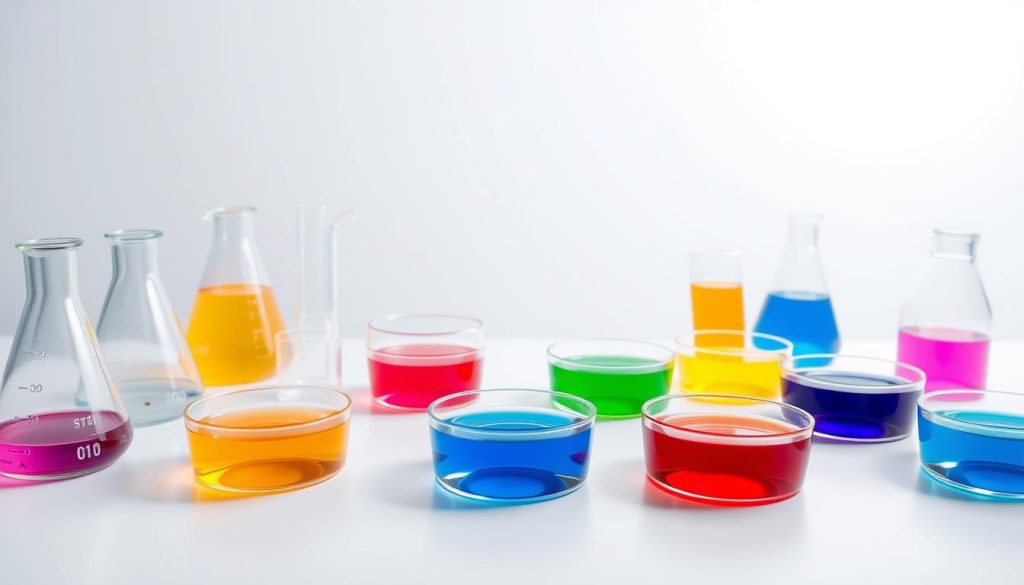
Gathering Materials: Gelatin, Food Coloring, and More
Start with four packets of unflavored gelatin (28g total) and four cups of heated water. Stir until fully dissolved to create a smooth base. For artistic versions, increase to six packets in the same liquid volume.
Essential tools include a drinking straw for cavity creation and a ruler for measurement accuracy. Add glitter sparingly to study how density affects particle paths. Cool mixtures to room temperature before pouring to prevent cloudiness.
Choosing the Right Containers: Petri Dishes, Cups, and Pans
Visibility matters when selecting vessels. Use shallow pans (1-1.5cm depth) for large-scale demonstrations. Remove air bubbles with a spoon for distortion-free observation.
| Container Type | Best Use | Depth | Visibility |
|---|---|---|---|
| Petri dish | Precision measurement | 0.5cm | Excellent |
| Glass cup | Classroom demos | 2cm | Good |
| Baking pan | Art projects | 1.2cm | Moderate |
Plastic containers work for home trials but may warp measurements. Always label vessels if testing multiple variables simultaneously.
Food Dye Diffusion in Gelatin: Execution and Variations
Witness invisible forces at play by tracking vibrant particles in a stable matrix. This hands-on exploration reveals how molecular behavior creates striking visual patterns while teaching core scientific principles. Follow these methods to transform simple materials into dynamic learning tools.

Step-by-Step Instructions for the Basic Demonstration
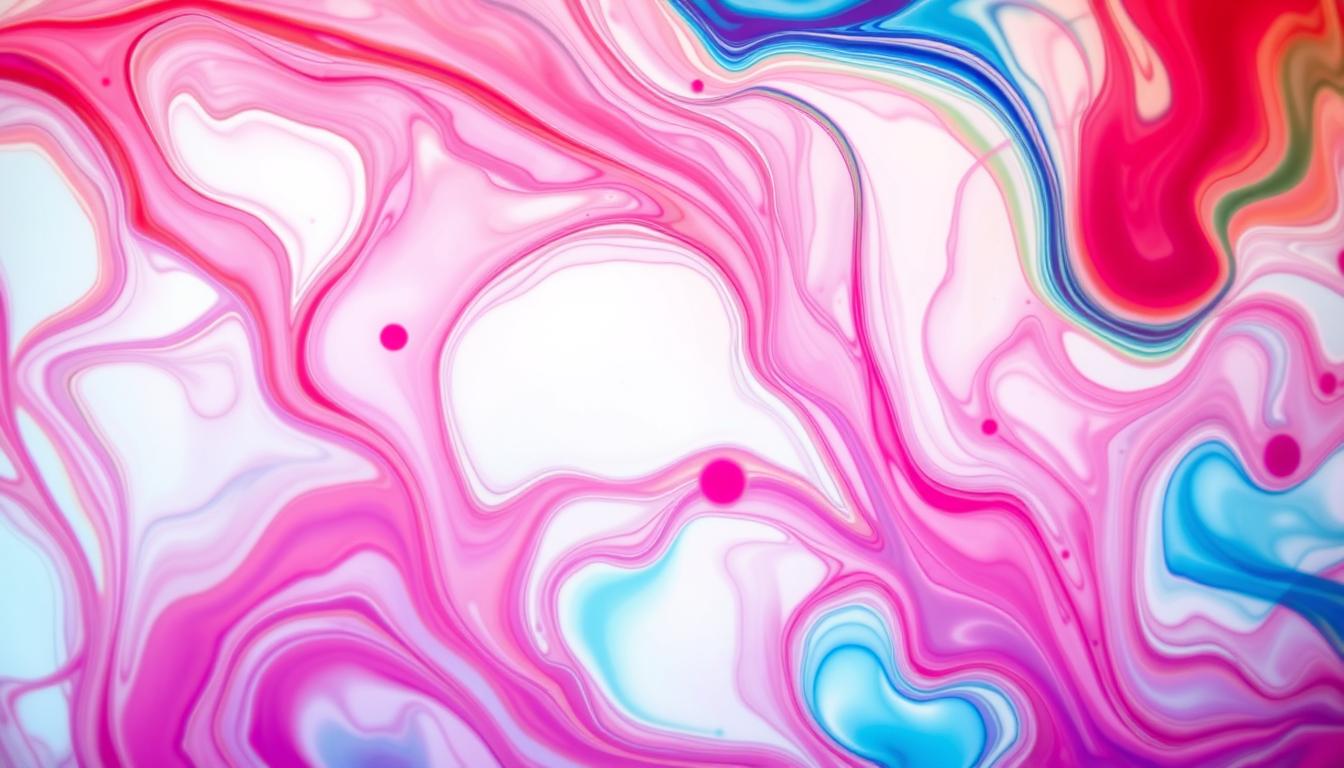
Press a drinking straw vertically into solidified gelatin, stopping ½ inch above the container’s base. Rotate the tool to carve clean cavities, then remove plugs with a toothpick. Add one drop of colored solution to each hole—watch as concentric circles form, mapping molecular journeys through the gel medium.
Customizing Your Exploration
Enhance observations by sprinkling glitter into liquid gelatin before cooling. Dense metallic flakes sink, while lightweight plastic particles float, demonstrating buoyancy effects. For membrane studies, stretch a paper towel over a water-filled jar secured with rubber bands. Test which substances penetrate this barrier over 24 hours.
| Variation | Materials Added | Observation Focus |
|---|---|---|
| Glitter | Metallic/plastic flakes | Particle density effects |
| Osmosis test | Paper towel, kernels | Membrane permeability |
| Art project | Cookie cutters | Evaporation patterns |
Advanced versions use pH-sensitive solutions like red cabbage juice mixed with baking soda. These react to acidity changes, creating color shifts that track chemical movement. Shape cooled gels into decorative window clings using cookie cutters—they demonstrate evaporation principles as they gradually shrink and harden.
Analyzing Diffusion Rates and Influencing Factors
How fast do substances redistribute themselves when undisturbed? Tracking colored particles through a stable medium reveals precise answers. Systematic measurement transforms colorful patterns into quantifiable data about molecular behavior.
Tracking Movement Patterns
Record the colored area’s diameter every three hours using digital photos. Measure screen distances with a ruler, then apply calibration ratios to determine real-world spread rates. For accurate comparisons:
- Maintain identical lighting for all images
- Use grid-lined containers as measurement guides
- Calculate average rates across multiple samples
Environmental Impact on Speed
Parallel tests under different conditions expose key variables. A chilled sample (40°F) versus room-temperature setup (72°F) shows dramatic differences:
| Condition | First 6 Hours | 24-Hour Total |
|---|---|---|
| Cold | 0.8 mm spread | 3.2 mm |
| Room temp | 2.1 mm spread | 8.4 mm |
Warmer environments accelerate movement by increasing particle energy. Plotting distance against time produces graphs where steeper slopes indicate faster rates—typically 0.16 mm/hour at room conditions.
Advanced techniques involve image analysis software to map concentration gradients. These tools measure hue intensity changes, matching theoretical models of molecular distribution. Such methods help predict how substances move through biological tissues or soil layers.
Creative Applications and Real-World Connections
The principles you’ve observed extend far beyond kitchen counters. They shape life-saving medical treatments and inspire artistic innovation. Let’s explore how this simple demonstration mirrors critical biological processes and fuels creative expression.
From Lab to Living Systems
Researchers use gelatin-based models to study how medicines travel through human tissues. Its structure mimics the extracellular matrix surrounding cells, particularly in tumor environments. Pharmaceutical teams analyze these patterns to design targeted drug delivery systems that reach specific areas of the body efficiently.
Science Meets Artistry
Transform your experiment into translucent window art. Cut cooled gelatin into geometric shapes and let them dry completely. As water evaporates, these creations become thin, adhesive decorations that cling to glass surfaces. The shrinking process reveals intricate patterns formed during molecular movement.
These applications show how foundational scientific concepts bridge disciplines. Whether optimizing cancer treatments or crafting seasonal decorations, understanding particle behavior unlocks endless possibilities across professional fields and personal projects.