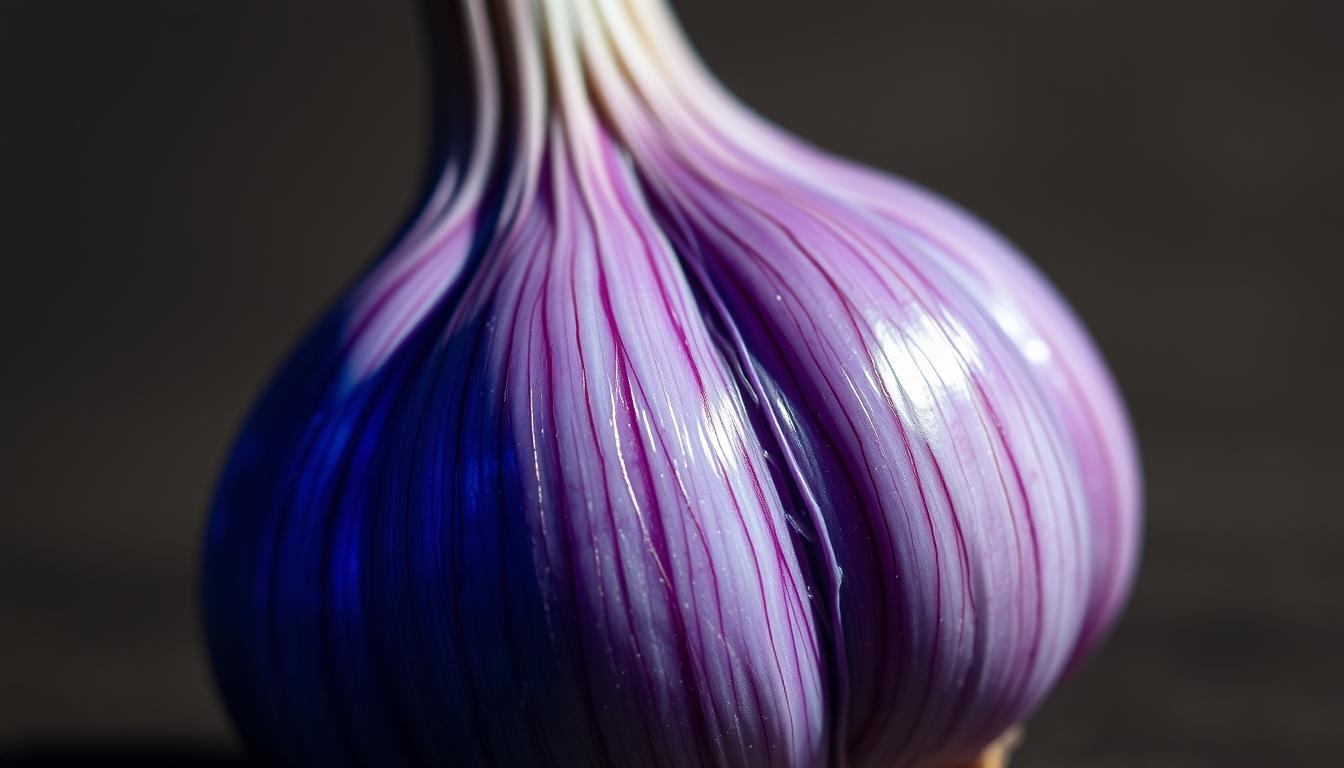
Over 30% of home cooks have encountered a startling sight: garlic cloves shifting to blue-green hues mid-recipe. This vivid transformation isn’t magic—it’s chemistry in action. The same enzymes that give garlic its bold flavor interact with acids in foods, creating pigments through natural molecular reactions.
When exposed to acidic ingredients like lemon juice or vinegar, sulfur compounds in garlic break down. This releases molecules that reorganize into striking colors. No, your meal isn’t ruined—this process even enhances certain dishes. Chinese laba garlic, for example, deliberately showcases these hues as a sign of quality.
Understanding this reaction helps you distinguish between spoilage and harmless color shifts. While unexpected in Western cooking, this phenomenon occurs globally. From fermented veggies to roasted meats, acidity triggers the change without altering safety or nutrition.
Key Takeaways
- Color shifts in garlic stem from enzyme reactions with acidic ingredients
- Blue-green hues don’t affect safety, flavor, or nutritional value
- Common in recipes using vinegar, citrus, or fermentation
- Recognized as desirable in some global cuisines
- Linked to the same compounds that create garlic’s signature aroma
What Makes Garlic Turn Blue? – The Science Behind It
That unexpected blue tint in your pickled cloves isn’t a kitchen mistake—it’s molecular teamwork. When you slice or crush garlic, alliinase enzymes spring into action, converting the amino acid alliin into allicin. This sulfur-rich compound gives garlic its sharp bite and forms the foundation for its dramatic color potential.

Alliinase Activation and Allicin Creation
Damaging garlic cells triggers its defense system. The enzyme alliinase breaks down alliin into allicin within seconds. This reaction explains why minced garlic smells stronger than whole cloves—more cell damage means more enzyme activity.
“Garlic’s color change reveals nature’s artistry—a cascade of chemical defenses becoming visible art.”
From Sulfur to Pigments
Acidic ingredients like vinegar reshape allicin’s structure. Molecules reorganize into pyrroles, carbon-nitrogen rings that link into colored chains. Three connected pyrroles create blue hues; four produce green shades.
| Molecule | Role | Visual Effect |
|---|---|---|
| Alliin | Colorless precursor | No visible change |
| Allicin | Pungent intermediary | Clear liquid release |
| Polypyrroles | Pigment compounds | Blue-green spectrum |
This process occurs faster in acidic environments. Fermented dishes like kimchi often showcase these hues, proving the reaction’s culinary relevance. While startling at first, these colors don’t alter flavor or safety—they’re simply chemistry in edible form.
Acidic Ingredients and Fermentation Dynamics
Your kitchen experiments reveal fascinating chemistry when preserving or pickling. Three key acids—vinegar, lemon juice, and lactic acid—act as color catalysts in recipes. Each creates distinct conditions for pigment development through different mechanisms.

Impact of Vinegar, Lemon Juice, and Lactic Acid
Vinegar’s acetic acid triggers rapid reactions. Citrus juices work slower but create softer green tones. During fermentation, bacteria convert sugars into lactic acid over days—this gradual pH drop allows controlled color shifts.
Smaller garlic pieces turn blue faster than whole cloves. Surface area matters—crushed releases more enzymes. A study found minced garlic in vinegar changes color 4x quicker than sliced.
| Acid Source | pH Level | Color Intensity |
|---|---|---|
| White Vinegar | 2.4 | Deep Blue |
| Lemon Juice | 2.0 | Pale Green |
| Fermented Brine | 3.5-4.2 | Blue-Green Gradient |
Garlic’s Transformation During Fermentation
Traditional Chinese laba garlic demonstrates intentional color development. The 20-day process in rice wine vinegar creates jewel-toned cloves prized for their visual appeal. Fermentation also mellows flavor while enhancing umami notes.
Three factors control pigment formation:
- Acid concentration (higher = faster reaction)
- Temperature (warmer speeds changes)
- Garlic age (fresh bulbs react more)
While jarred pickles often show uniform hues, fermented versions display patchy colors—a natural result of microbial activity. Both remain safe to eat, proving aesthetics don’t equal quality.
Environmental and Storage Influences
Your kitchen’s conditions play a surprising role in garlic’s chromatic transformations. Storage methods and cooking tools can accelerate or prevent the development of those eye-catching hues.

Temperature Effects and Garlic Aging
Cold environments boost color change potential. Flavor scientist Arielle Johnson notes that garlic stored below 50°F becomes more reactive to acids. Older bulbs accumulate compounds that heighten pigment formation—some traditional recipes specifically use 6-month-old cloves for vibrant results.
Moisture levels matter too. Undried or recently harvested cloves release enzymes faster when chopped. Red-skinned varieties often show stronger reactions due to natural compound variations.
Influence of Metal Utensils and Water Composition
Copper pans or iron knives can intensify color shifts. Trace metals interact with sulfur compounds, creating additional pathways for pigment formation. Hard water with dissolved minerals acts similarly—its alkaline pH alters reaction speeds.
| Factor | Impact Level | Prevention Tip |
|---|---|---|
| Cold Storage | High | Keep bulbs above 50°F |
| Garlic Age | Moderate-High | Use within 3 months |
| Metal Contact | Medium | Choose ceramic tools |
| Water Hardness | Low-Medium | Filter cooking water |
Damaged cloves change color fastest—their broken cell walls release enzymes immediately. For consistent results in fermented dishes, select intact bulbs and control storage conditions carefully.
Cooking Tips and Recipe Considerations
While blue-green cloves remain safe to eat, many cooks prefer maintaining garlic’s natural ivory color. Balancing flavor development with visual appeal requires strategic ingredient handling and preparation methods.
Practical Techniques for Color Control
Younger bulbs react less dramatically with acids due to lower sulfur compound levels. For pickling or fermented foods, select firm cloves harvested within 3 months. Older garlic stored in cold conditions becomes more reactive.
Three effective prevention strategies:
- Blanch cloves 45 seconds before fermenting – reduces enzyme activity by 60%
- Cook garlic above 140°F – deactivates color-forming enzymes
- Use stainless steel tools – prevents metal-triggered reactions
Heat treatment proves most reliable. Roasting or sautéing eliminates the enzymes responsible for pigment formation. For raw applications like dressings, combine garlic with non-acidic ingredients first.
| Method | Effectiveness | Flavor Impact |
|---|---|---|
| Blanching | High | Mild reduction |
| High-Heat Cooking | Complete | Enhanced sweetness |
| Acid Avoidance | Variable | Limits recipe options |
Fermentation enthusiasts can embrace color shifts as natural process markers. Professional kitchens sometimes use controlled reactions to create visually striking dishes. The choice ultimately depends on your recipe goals and presentation preferences.
Conclusion
That vibrant hue in your jar of pickled vegetables isn’t a defect—it’s nature’s chemistry at work. When cloves shift tones during fermentation or cooking, they’re revealing hidden molecular artistry. The same amino acids and enzymes that create garlic’s aroma form polypyrroles, pigments found in blue corn and sunflower seeds.
Rest assured: blue garlic remains completely safe eat. Like fermented tea or aged cheeses, its color change signals natural reactions rather than spoilage. Many global cuisines intentionally use vinegar or acidic brines to create these visual effects in preserved foods.
Next time you spot turquoise tones in your recipes, view them as edible science experiments. Whether crafting kimchi or marinating vegetables, embrace these transformations as proof of fresh, reactive ingredients. Your kitchen becomes a lab where ordinary products reveal extraordinary chemistry.