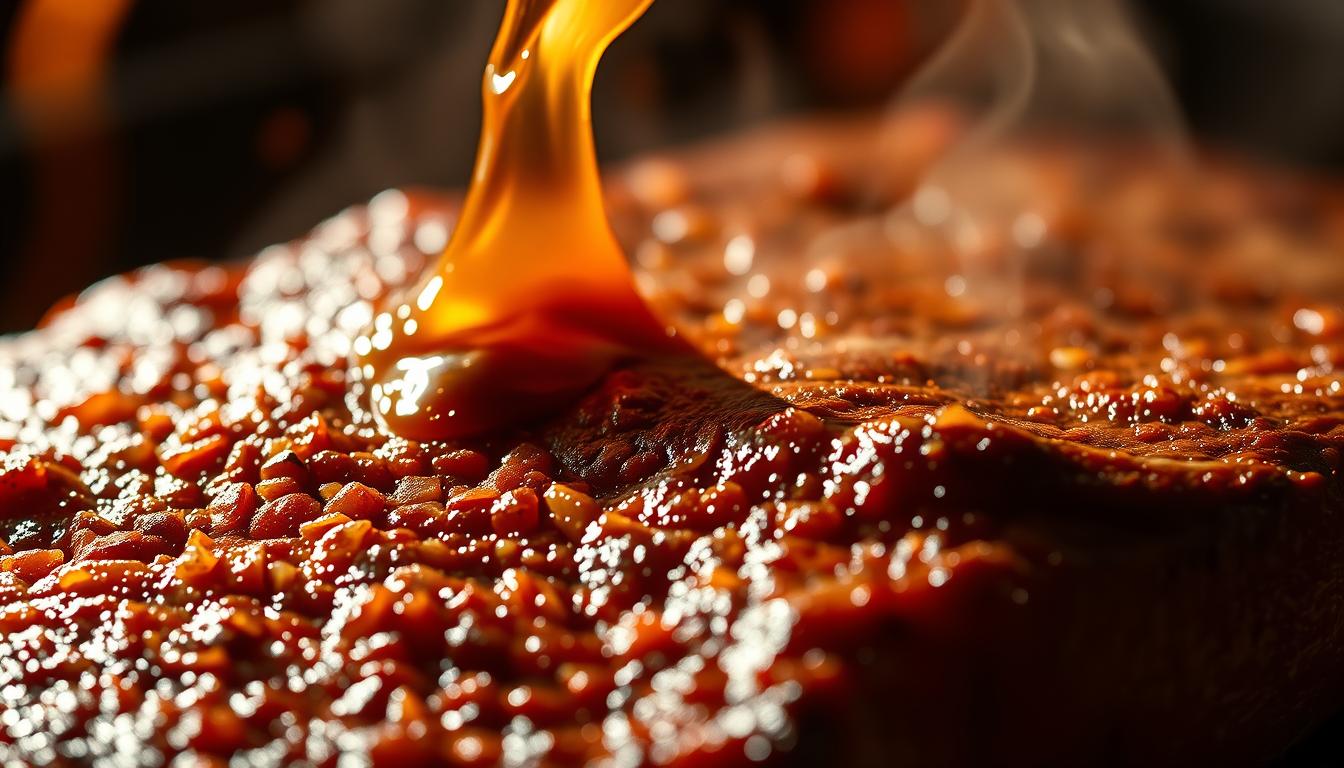
Did you know that over 800 aroma compounds form when you toast a slice of bread? This explosion of flavor isn’t magic—it’s science. A powerful chemical process kicks in when heat meets proteins and sugars in food. What starts as a simple interaction evolves into something extraordinary, creating layers of taste and smell that turn ordinary ingredients into culinary masterpieces.
This transformation occurs through a series of rapid changes. Amino acids and sugars combine under high heat, sparking reactions that build rich, savory notes. Think about that golden crust on a steak or the irresistible smell of freshly baked cookies. These experiences aren’t accidents—they’re carefully orchestrated by chemistry.
Understanding this process lets you unlock new depths in your cooking. It’s not just about achieving color; it’s about developing complexity. From crispy roasted vegetables to caramelized onions, this reaction enhances textures and flavors in ways simple browning never could.
You’ll soon see how controlling temperature and timing can elevate everyday meals. Whether you’re grilling, baking, or pan-searing, mastering these principles means consistently creating dishes that delight the senses.
Key Takeaways
- Heat triggers interactions between proteins and sugars, generating complex flavors
- Toasted bread develops hundreds of aroma compounds through this process
- Searing meats creates signature crusts packed with savory depth
- This chemistry extends far beyond visual browning to flavor development
- Temperature control is critical for optimizing results
Introduction to the Maillard Reaction
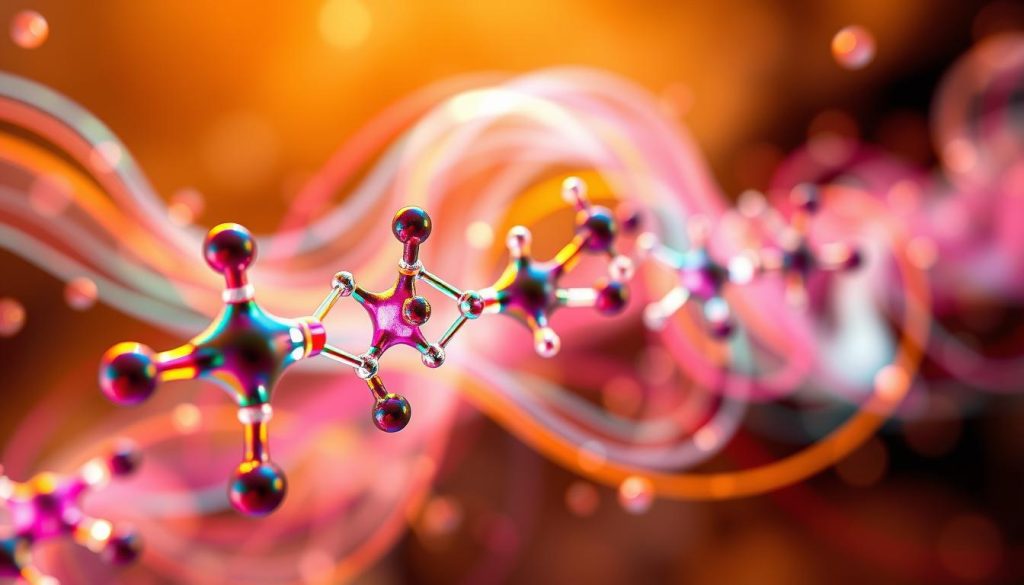
Your kitchen becomes a flavor laboratory when heat meets proteins and sugars. This transformative process creates over 600 distinct aroma compounds in common foods like roasted coffee and grilled meats. While many call it “browning,” that term misses the essence of what’s happening at molecular levels.
At its core, this chemical dance requires three elements: amino acids, reducing sugars, and dry heat between 280-330°F. When these combine, they produce complex flavors ranging from nutty to savory. Chefs prize these results more than mere color changes.
| Flavor Development | Visual Change | Key Requirements |
|---|---|---|
| Creates 200+ aroma molecules | Golden-brown surfaces | Dry cooking methods |
| Enhances umami notes | Crust formation | Proper temperature range |
| Adds depth to simple ingredients | Appetizing appearance | Amino acid presence |
Food scientists argue we should rename this phenomenon “the flavor reaction.” Why? Because 80% of what you taste in seared steak or baked bread comes from these interactions, not basic caramelization.
Mastering this process lets you control outcomes in your cooking. Adjust heat levels to emphasize specific flavor profiles. Manage moisture to prevent steaming, which stops the reaction. With practice, you’ll create dishes where every bite tells a chemical success story.
What is “The Maillard Reaction: Browned & Brilliant”?
Ever notice how perfectly seared meat gets its rich color? It starts when heat pushes proteins and carbohydrates into a molecular dance. Specific building blocks rearrange into microscopic rings that scatter light, creating that desirable browned appearance.
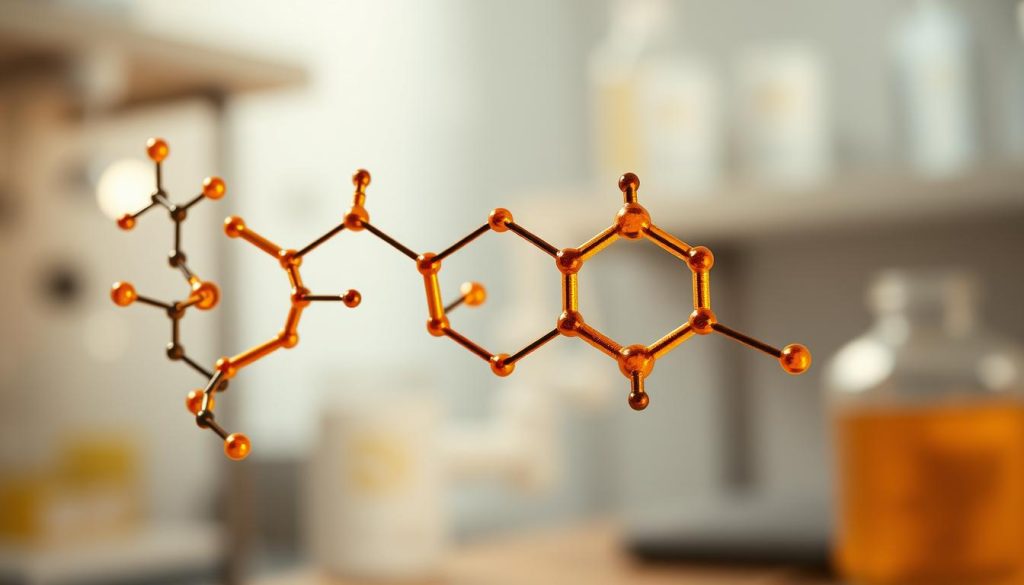
This transformation begins simply. Free-floating amino acids link with simple sugars under high heat. These pairs then fold into intricate ring patterns through rapid chemical shuffling. The resulting structures reflect specific light wavelengths, making surfaces appear golden or deep brown.
| Stage | Key Actions | Results |
|---|---|---|
| Initial Interaction | Amino acids bind with sugars | Basic flavor molecules form |
| Advanced Transformation | Rings combine into clusters | 400+ aroma compounds develop |
What seems like a single event actually unfolds in waves. Early-formed molecules spark new interactions, building complexity with each thermal pulse. This domino effect explains why baked goods develop deeper flavors as they cool slightly.
Mastering this cascade helps you control outcomes. Proper heat management allows sustained molecular activity without burning. You’ll create layered flavors that simple charring can’t match, transforming basic ingredients into extraordinary meals.
The Science Behind the Reaction
Flavor alchemy begins when amino acids and sugars collide under heat. This intricate process unfolds through three distinct phases, each building complexity in your food’s taste and aroma.
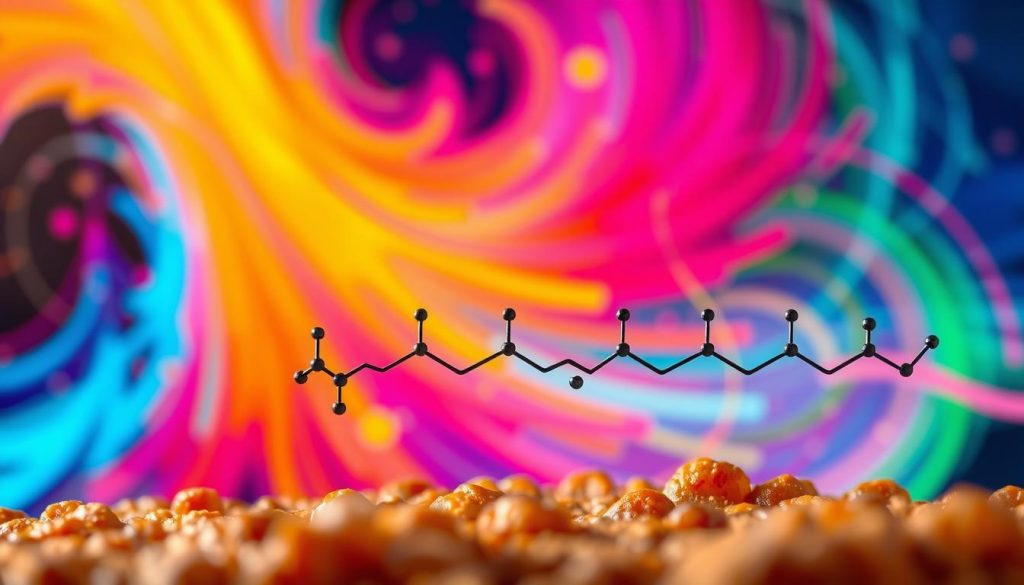
Chemical Mechanisms and Processes
Stage one initiates when a sugar molecule bonds with an amino group. This fusion creates unstable intermediates that quickly rearrange. Depending on the sugar type—glucose or fructose—these molecules undergo Amadori or Heyns restructuring.
Stage two sees these modified compounds break down further. New bonds form between nitrogen and carbon atoms, generating hundreds of flavor precursors. By stage three, these precursors combine into complex melanoidins—the compounds responsible for rich colors and deep flavors.
Role of Amino Acids and Reducing Sugars
Amino acids act as nitrogen donors, while reducing sugars provide reactive carbonyl groups. Glucose and fructose work best due to their unstable ring structures. Different pairings create unique results—methionine with glucose produces savory notes, while lysine and fructose yield caramel-like sweetness.
Mastering this interplay lets you predict outcomes in dishes. For deeper insights into these interactions, explore our guide to the science of cooking. Control heat carefully to steer these reactions toward your desired flavor profile.
Temperature, Moisture, and Their Effects
Cooking’s most transformative processes hinge on two invisible factors: thermal energy and hydration levels. Surface dryness determines whether ingredients develop complex flavors or simply simmer in their juices.
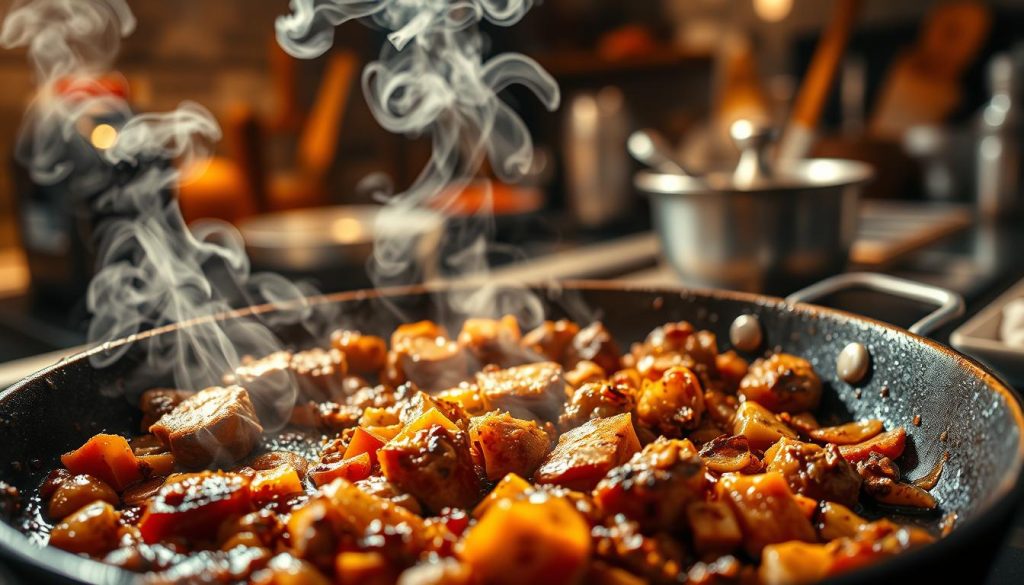
Dry Heat vs. Wet Cooking Techniques
Roasting and grilling create ideal conditions for flavor development. These methods push surfaces beyond 300°F, triggering rapid molecular changes. Water-based techniques like steaming cap temperatures at 212°F—too low for significant browning.
| Technique | Max Temp | Surface Moisture | Flavor Outcome |
|---|---|---|---|
| Grilling | 500°F | Low | Intense browning |
| Boiling | 212°F | High | Minimal flavor development |
| Pan-searing | 400°F | Moderate | Balanced crust formation |
Impact on Flavor and Browning Intensity
High temperatures accelerate water evaporation, creating crisp exteriors. Every 50°F increase doubles reaction speed until 350°F, where oils begin smoking. Moisture acts as a brake—even small amounts force energy into vaporization rather than flavor creation.
Pat proteins dry before cooking to bypass the boiling point barrier. This simple step lets surfaces reach critical temperatures faster. Monitor heat sources carefully—sustained dry conditions yield exponential flavor gains.
Caramelization Compared to the Maillard Reaction
Two kitchen transformations create complex flavors through heat, but their chemical blueprints couldn’t be more distinct. One demands teamwork between molecules, while the other thrives on solitary decomposition.
Key Differences in Chemical Processes
The maillard reaction requires proteins and sugars to collaborate. Amino acids bond with carbohydrates, generating hundreds of flavor compounds. Caramelization needs only sugar molecules breaking down under intense heat.
Temperature ranges separate these processes. Browning reactions flourish between 280-330°F with dry surfaces. Pure sugar decomposition starts around 320°F, peaking near 350°F.
| Process | Components | Flavor Output |
|---|---|---|
| Maillard | Proteins + Sugars | Savory, nutty, roasted |
| Caramelization | Sugar only | Sweet, buttery, bitter |
Food composition determines which process dominates. Carrots caramelize due to high sugar content. Steaks develop crusts through protein-sugar interactions. Both reactions can occur simultaneously in dishes like roasted vegetables with olive oil.
Control these transformations by managing heat and ingredients. Lower moisture levels favor browning reactions. Higher sugar concentrations push caramelization forward. Mastering this balance unlocks layered flavors in every dish.
The Role of Proteins and Amino Acids in Food Chemistry
Proteins act as molecular architects in cooking transformations. Their complex structures break down under heat, releasing amino groups that drive flavor development. These building blocks work differently based on their form—whether bound in proteins or floating freely as amino acids.
Stability and Consumption in Reactions
Studies reveal proteins show surprising resilience during storage. In one experiment, protein content dropped from 23.45 mg to 16.67 mg per 100g over time. Free amino acids disappeared faster—their levels fell nearly 40% in the same period.
| Component | Initial Content | Final Content | Change |
|---|---|---|---|
| Proteins | 23.45 mg/100g | 16.67 mg/100g | -29% |
| Amino Acids | 303.84 mg/100g | 186.23 mg/100g | -38.7% |
This gap occurs because proteins release amino groups gradually. Their coiled structures protect reactive sites until heat unwinds them. Free amino acids lack this protection, reacting immediately when conditions change.
Your cooking methods influence these dynamics. Dry-heat techniques preserve more proteins while using up available amino acids. Moist environments accelerate breakdowns, altering flavor outcomes. Balancing these factors helps maximize savory depth in dishes.
Understanding consumption rates lets you predict flavor intensity. More free amino acids mean faster reactions during searing or roasting. Stored ingredients with lower amino acid content may need longer cooking times to achieve desired browning.
Color Enhancement and Melanoidin Formation
Visual appeal in cooking starts with microscopic color factories. When heat activates proteins and sugars, they build complex polymers called melanoidins. These nitrogen-rich compounds create appetizing golden-brown surfaces through precise chemical teamwork.
How Browning Impacts Visual Appeal
Melanoidins form through three-stage molecular stacking. Initial reactions produce light-absorbing structures that intensify hues over time. Research shows color intensity can jump 70% during extended storage periods.
| Storage Duration | Color Measurement (IU) | Increase Rate |
|---|---|---|
| 0 months | 15,400 ± 57.74 | Baseline |
| 2 months | 17,568 ± 49.12 | 14.07% |
| 10 months | 26,200 ± 25.16 | 70.13% total |
Deeper shades signal advanced flavor development. Each 14% color gain every two months reflects ongoing molecular rearrangements. This progression explains why aged cheeses and cured meats develop richer appearances.
Control this process by managing cooking duration and storage conditions. Higher heat accelerates polymer formation but risks burning. Balanced techniques yield dishes where visual appeal matches taste complexity perfectly.
Sensory Attributes: Flavor and Aroma Evolution
Have you ever wondered why roasted coffee smells nothing like seared steak? The answer lies in microscopic chemical messengers created during cooking. These compounds transform ordinary ingredients into sensory experiences that trigger memories and cravings.
From Toasted Bread to Seared Meats
When heat activates proteins and sugars, it generates over 800 aroma molecules. Though present in tiny amounts, these compounds pack intense effects. Furan delivers meaty caramel whispers, while thiophene adds campfire smokiness to grilled vegetables.
Pyrazine works behind the scenes in baked goods. This compound builds nutty undertones in bread crusts and roasted nuts. Even 0.0001% concentration can alter your perception of depth in dishes.
| Compound | Aroma Profile | Common Sources |
|---|---|---|
| Furan | Caramel-meat fusion | Seared meats, roasted onions |
| Thiophene | Smoky char | Grilled vegetables, coffee beans |
| Pyrazine | Toasted nuts | Bread crusts, roasted peanuts |
Different ingredient combinations explain why frying fish smells distinct from baking cookies. Chicken skin contains cysteine sugars that react differently than wheat’s fructans. This chemical diversity lets you create unique flavor signatures through cooking methods.
Mastering these reactions helps you predict outcomes. High-heat searing maximizes savory compounds in meats, while moderate oven temps develop complex layers in baked goods. Your kitchen becomes an aroma laboratory where every technique tells a new story.
Culinary Applications and Techniques
Transform ordinary ingredients into flavor-packed dishes by mastering heat’s hidden potential. Strategic cooking methods unlock complex flavors in everyday foods through controlled chemical interactions.
Searing, Roasting, and Oven Cooking Methods
High-heat techniques create ideal conditions for flavor development. Preheat cast iron pans before searing meats to ensure immediate surface dehydration. For oven roasting, position racks to allow air circulation around roasting pan contents.
Dry surfaces brown faster. Pat proteins thoroughly before cooking. Use minimal oil to prevent steaming effects. Rotate foods halfway through roasting for even coloration.
Practical Tips to Optimize the Reaction in Your Kitchen
Maximize flavor creation with these methods:
Control moisture: Salt meats 45 minutes before cooking to draw out surface liquids. Blot again before heating.
Adjust heat zones: Create dual-temperature areas in pans. Sear over high heat, then shift foods to cooler sections to finish cooking.
Layer ingredients: Roast vegetables in single layers. Overcrowding traps steam and slows browning.
These techniques turn simple preparations into sensory experiences. Proper pan selection and heat management elevate both texture and taste in every dish.