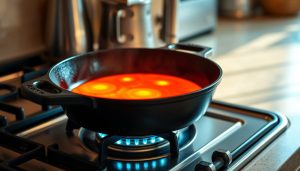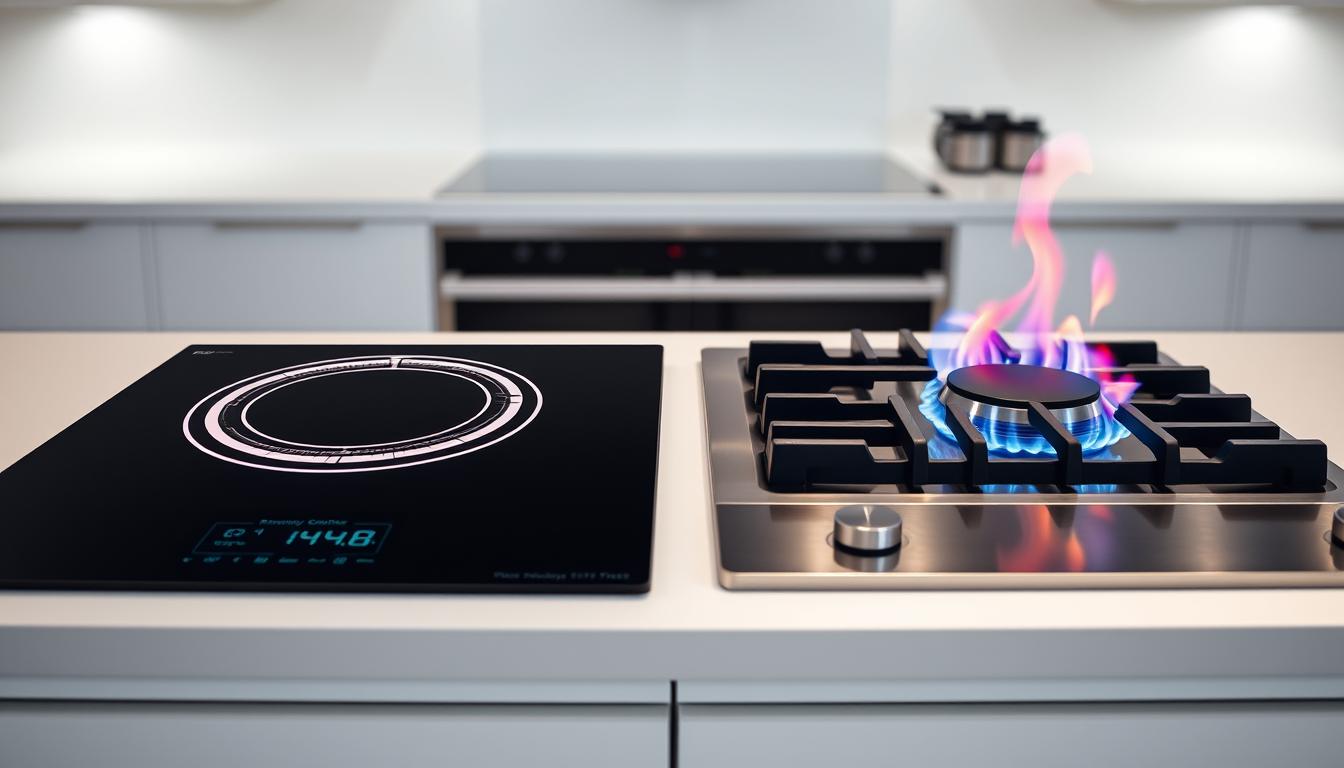
Did you know 37% of home fires start in the kitchen, often linked to overheated surfaces or gas leaks? Modern cooking technology now offers two distinct paths: one powered by magnetic energy, the other by combustible flames. Your decision between these systems carries life-altering consequences most homeowners never consider.
New research reveals electromagnetic models automatically shut off when cookware isn’t detected, eliminating accidental burner activation. The cooking surface stays cool enough to touch seconds after use – a game-changer for families with curious toddlers. Meanwhile, 1 in 5 gas range users report smelling unburned fuel when igniters malfunction, exposing households to potential explosions or carbon monoxide.
This comparison isn’t about cooking speed or chef preferences. It’s about understanding how heat generation methods fundamentally alter risk profiles. Traditional flame-based systems require constant vigilance around open fires and ventilation. Modern alternatives use targeted energy transfer, leaving countertops safer and air cleaner.
Key Takeaways
- Electromagnetic models prevent surface overheating through automatic sensors
- Gas systems pose combustion risks from open flames and fuel leaks
- Immediate temperature control reduces accidental burns
- Proper ventilation remains critical for gas appliance safety
- Childproof features differ significantly between technologies
Induction vs. Gas Cooktop Safety: An In-Depth Comparison
Modern kitchens use two distinct methods to transform raw ingredients into meals. One approach uses invisible energy waves, while the other depends on burning fossil fuels. These fundamental differences create unique safety profiles every home chef should understand.

How Energy Transfer Works
Electromagnetic models create heat through magnetic pulses. These pulses only activate when touching compatible metal pans. Your pots become the heat source, leaving the cooking surface cool to the touch within seconds.
Traditional systems work differently. Combustion-based units produce flames that heat air and surfaces. This method wastes energy while creating hot zones around burners. Residual heat lingers long after turning knobs to off.
Critical Safety Factors
Automatic shutoff systems prevent accidental activation in modern units. Sensors detect missing cookware and disable power flow. This feature proves vital for households with young children or forgetful users.
Open flames present multiple risks. Unattended pans can ignite nearby materials, while gas leaks might go unnoticed. Proper ventilation becomes essential to prevent dangerous fume buildup in enclosed spaces.
Temperature control differences matter. Immediate response times allow quicker adjustments when liquids boil over. Gradual cooling periods on traditional surfaces increase burn risks during cleanup.
Understanding How Induction and Gas Cooktops Work
At the heart of every kitchen lies a choice between two fundamentally different heating technologies. One uses magnetic waves to energize pans directly, while the other relies on burning fuel to create flames. These systems operate on opposing principles that affect everything from cleanup to energy bills.

The Science Behind Induction Cooking
Electromagnetic coils beneath the glass surface create alternating magnetic fields. When you place ferrous cookware (like cast iron or magnetic stainless steel) on the zone, these fields generate heat within the pan itself. The cooking area stays cool because energy transfers directly to your food – not the surrounding surface.
Studies show this method achieves 90% energy efficiency, nearly double traditional gas systems. Your water boils faster, and spills won’t bake onto the stovetop. Power cuts off instantly when removing the pan, eliminating residual heat dangers.
The Mechanics of Gas Cooktops
Gas units ignite natural gas or propane to produce open flames. These flames heat the air between the burner and your cookware, warming pans through thermal transfer. While this allows visual flame adjustment, 60% of generated heat escapes into your kitchen instead of cooking food.
Burners remain scalding long after turning them off, creating burn risks during cleanup. Combustion also produces carbon monoxide and nitrogen dioxide, requiring constant ventilation to maintain air quality.
| Feature | Induction | Gas |
|---|---|---|
| Energy Efficiency | 90% | 40% |
| Heat Source | Magnetic pan heating | Open flame combustion |
| Surface Temperature | Remains cool | Stays hot |
| Response Time | Instant adjustments | 5-10 second delay |
| Cookware Compatibility | Magnetic metals only | All materials |
Safety Features and Built-In Protections
Your kitchen’s cooking system silently shapes your household’s risk exposure through invisible safeguards or lingering threats. Advanced engineering now separates these technologies into distinct safety categories – one proactive, the other reactive.

Smart Safeguards in Modern Appliances
Electromagnetic models employ multiple fail-safes. Sensors disable power if they detect no compatible pans for over 30 seconds. A temperature limiter prevents surfaces from exceeding 150°F – too hot for boiling water, but not enough to ignite paper.
Try placing an empty pot on an active zone. The system refuses to heat until detecting sufficient liquid volume. This prevents scorched cookware and potential fires from overheating oils.
Combustion-Related Concerns
Open flames introduce variables no sensor can fully control. Gas ignition failures release unburned methane – a greenhouse gas 25x more potent than CO₂. Studies show homes with gas systems have 42% higher nitrogen dioxide levels than induction-equipped kitchens.
“Children in gas-cooking households face 20% higher asthma risks,” reports the EPA’s Indoor Air Quality Division.
| Safety Aspect | Electromagnetic Models | Flame-Based Systems |
|---|---|---|
| Auto Shutoff | Instant pan removal response | Manual knob adjustment required |
| Surface Temperature | Remains below burn threshold | Reaches 500°F+ |
| Air Quality Impact | Zero emissions | NO₂ & CO production |
| Child Safety | Lock controls & cool surfaces | Exposed heat zones |
While gas allows visual flame monitoring, its byproducts create invisible airborne risks. Ventilation fans must run continuously during use – an energy drain induction users avoid. Electromagnetic fields pose no cumulative health risks, with decades of MRI technology confirming their safety.
Energy Efficiency and Cost Comparison
The true price of your cooking system extends beyond showroom stickers. While electromagnetic models command higher upfront costs, their operational savings reshape long-term budgets. Let’s examine how energy transfer rates and installation factors impact your wallet.
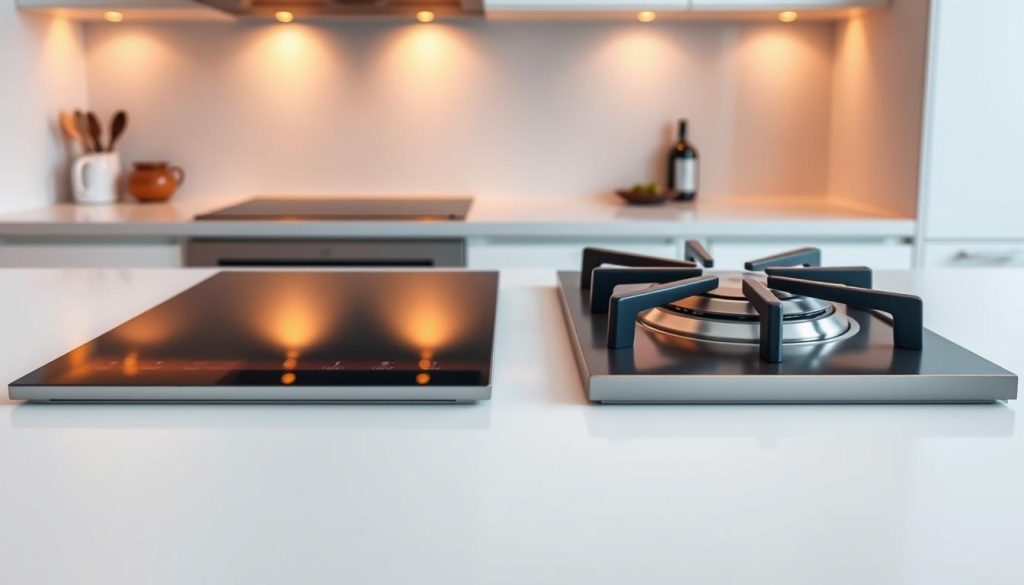
Energy Transfer and Efficiency Metrics
Magnetic systems convert 90% of electrical energy into usable heat – nearly triple traditional flame-based methods. This means boiling water in 3 minutes instead of 8, slashing power consumption per meal. Your air conditioning bill also benefits since less wasted heat escapes into the kitchen.
Long-Term Cost and Installation Considerations
Popular 30-inch models show clear price differences. Samsung’s gas unit retails at $800, while their induction counterpart costs $1,485. However, electromagnetic units use 25% less energy monthly, potentially offsetting the premium within 5 years.
“Households using induction report $75 annual energy savings versus gas,” notes an ENERGY STAR case study.
| Factor | Electromagnetic | Flame-Based |
|---|---|---|
| Initial Cost | $1,200-$2,500 | $700-$1,800 |
| Efficiency | 90% | 40% |
| Installation | 240V outlet required | Gas line needed |
| Rebates | Up to $840 (IRA) | None |
Switching systems requires infrastructure changes. Existing gas users must cap lines and install 240-volt circuits – a $300-$1,200 expense. However, federal incentives through 2032 cover 30% of upgrade costs, making transitions more affordable.
Cooking Performance, Temperature Control, and Cleaning
Kitchen efficiency hinges on two critical factors: how quickly your equipment responds and how easily it stays spotless. Modern cooking systems differ dramatically in these areas, reshaping meal preparation and cleanup routines.

Precision and Speed of Induction Cooking
Boiling 6 quarts of water takes just 4 minutes with magnetic technology – up to 65% faster than flame-based alternatives. Heat forms directly in your pan’s base, eliminating energy waste from open flames. This direct transfer prevents uneven “hot spots,” keeping delicate sauces emulsified instead of breaking into messy splatters.
Adjustments happen instantly. Reduce power from boil to simmer in one tap, mirroring professional kitchen responsiveness. Sensors maintain exact temperatures, whether you’re melting chocolate or searing steaks.
Ease of Cleaning and Maintenance
A smooth glass top wipes clean in seconds. Spilled pasta sauce? Spray, wipe, done – no baked-on residue. Since surfaces don’t get hot enough to burn food, scrubbing becomes obsolete.
Traditional systems demand disassembly. Four burner grates, caps, and bowls require weekly soaking and scrubbing. You’ll wait for components to cool before handling them, adding steps to your routine. One study found gas users spend 73% more time cleaning than induction owners monthly.
Induction-Compatible Cookware and Setup Requirements
Your existing pots might hold hidden compatibility secrets. Magnetic technology demands specific cookware traits many home chefs overlook, transforming ordinary meal prep into a science experiment.

Selecting the Right Pots and Pans
Grab a refrigerator magnet – it’s your new kitchen detective. If it sticks firmly to your pan’s base, you’ve got electromagnetic-ready gear. Cast iron skillets and stainless steel saucepans usually pass this test with flying colors.
Non-starters include classic copper pans and lightweight aluminum pots. These materials block magnetic fields, leaving your stovetop unresponsive. Even some “stainless” pieces fail if they contain nickel alloys.
- Cast iron Dutch ovens: Perfect conductors
- Tri-ply stainless steel: Optimal heat distribution
- Enamel-coated steel: Budget-friendly option
Flat-bottom designs matter more than you’d think. Warped surfaces reduce contact area, slowing heating times. Partial magnetic bases create dangerous hot spots – your risotto might scorch while edges stay lukewarm.
Preparing Your Kitchen for Induction
Switching systems requires more than new pans. Most homes need 240-volt outlets installed, similar to electric dryer hookups. Licensed electricians typically complete this upgrade in 2-4 hours.
Former gas users face additional steps:
“Homeowners must cap gas lines properly to prevent leaks,” advises National Kitchen & Bath Association guidelines.
| Cookware Type | Compatibility | Price Range |
|---|---|---|
| Cast Iron | Excellent | $20-$300 |
| Stainless Steel | Good | $40-$600 |
| Copper Core | None | $80-$800 |
Federal tax credits through 2032 offset 30% of installation costs. Budget-conscious cooks can repurpose existing magnetic pieces while gradually upgrading their arsenal.
User Experiences and Real-World Insights
Real-world stories reveal hidden dangers and unexpected benefits that specs sheets can’t capture. Families and chefs alike share transformative journeys from fuel-based systems to modern alternatives.
Testimonials and Personal Stories
A Colorado parent recalls waking to rotten-egg smells: “Our gas burner failed to ignite overnight, leaking dangerous fumes while we slept. We became induction evangelists overnight after switching – no more midnight anxiety checks.”
Professional chefs echo this shift. James Beard Award winner Elena Terry notes: “My home induction range delivers better heat control than most restaurant gas stoves. Perfect sears without smoke alarms blaring.”
Practical Tips for Transitioning
Mastering electromagnetic cooking takes practice. Start with these adjustments:
- Use lower settings than gas – #7 mimics medium-high flame
- Lift pans slightly to pause heating instantly
- Invest in flat-bottom cookware for consistent contact
“It took three weeks to unlearn 20 years of gas habits, but now I’ll never go back,” shares New York food blogger Marc Diaz.
Legislative changes accelerate adoption. Since 2023, New York bans gas hookups in new buildings, with California and Massachusetts proposing similar laws. Early adopters report smoother transitions by:
- Testing existing pans with magnets first
- Practicing temperature presets for common dishes
- Using residual heat for finishing delicate sauces
Conclusion
Your kitchen’s heartbeat depends on choosing systems that align with modern safety standards and lifestyle needs. Electromagnetic models reduce risks through instant shutoffs and cooler surfaces, while traditional flame-based units demand constant vigilance. Energy efficiency and cleaner air quality further tip scales toward innovative solutions.
Transitioning requires upfront investments but pays dividends in safety and long-term savings. Pair your system with safest cookware designed for optimal heat transfer. New York’s recent legislation highlights the growing shift toward electromagnetic technology in residential spaces.
Consider how each option impacts daily routines and emergency scenarios. Advanced features in modern appliances provide peace of mind, particularly for households with children or pets. The future of kitchen design leans toward intelligent safeguards without sacrificing culinary precision.