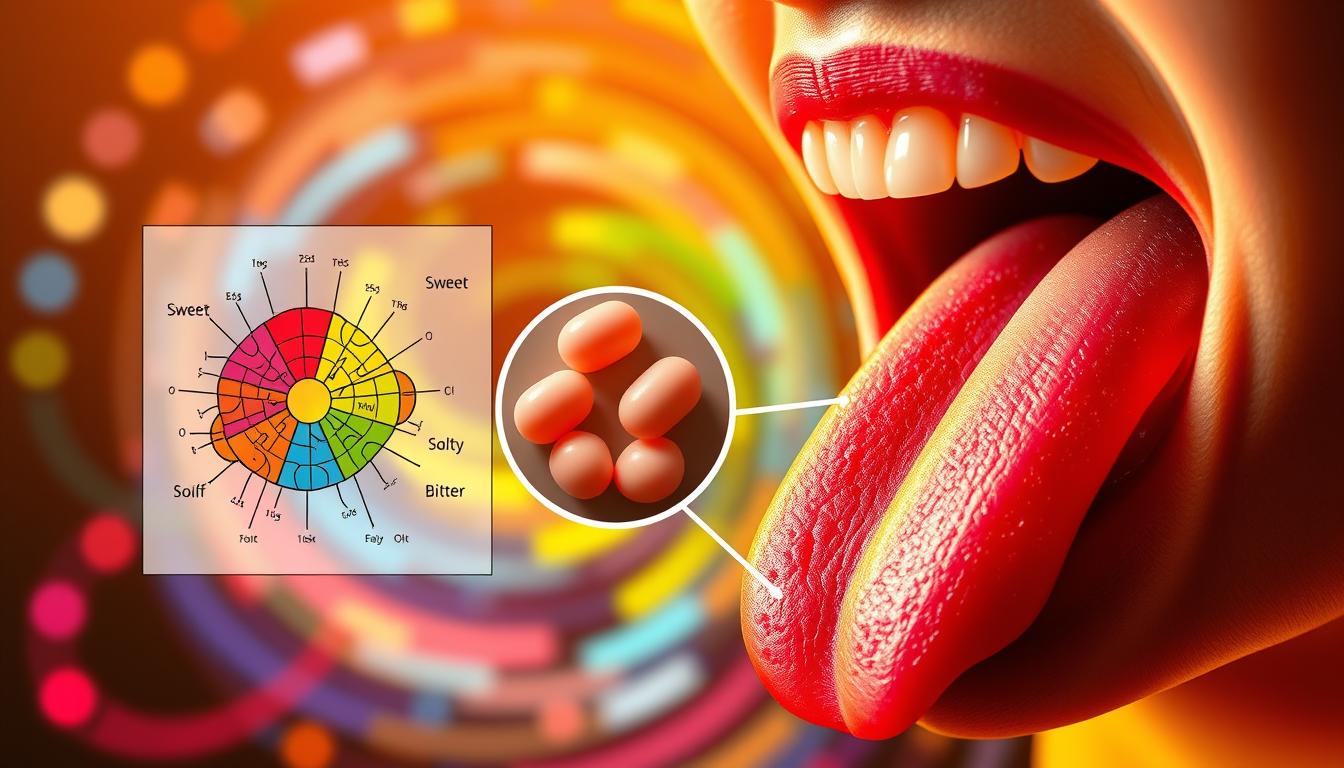
Every two weeks, your mouth completely replaces its 8,000 microscopic taste detectors. These living sensors cluster in mushroom-shaped bumps called papillae, working with hair-like structures that send flavor signals to your brain. Despite this biological marvel, most people misunderstand how these systems actually operate.
The idea that sweetness registers only on the tip of your tongue originated from misinterpreted 1901 research. Modern studies reveal all taste zones detect bitter, salty, sour, sweet, and umami flavors equally. Food scientists now use advanced imaging to show how your entire oral cavity collaborates in flavor perception.
This revelation changes how you experience meals. Cooking methods, ingredient pairings, and even nutrition choices rely on accurate sensory knowledge. Chefs and dietitians increasingly reject outdated “tongue maps” when creating balanced flavors or addressing eating disorders.
Recent discoveries about your mouth’s chemical receptors explain why some foods taste radically different under varying conditions. Your sensory cells adapt based on temperature, texture, and even previous bites – mechanisms the original 20th-century researchers couldn’t measure.
Key Takeaways
- The tongue contains thousands of taste receptors that renew every 14 days
- All taste zones detect basic flavors equally, contrary to popular diagrams
- Modern imaging technology disproves century-old sensory theories
- Flavor perception involves your entire mouth and nasal passages
- Accurate taste science impacts culinary arts and nutritional health
- Sensory cells adapt based on environmental factors and meal context
Understanding Taste Bud Function and Common Misconceptions
Your tongue’s hidden mechanics reveal surprising truths about flavor detection. Tiny structures called papillae house clusters of sensory cells that renew every 14 days. These living detectors work like biological laboratories, analyzing food compounds through microscopic hairs called microvilli.
The Anatomy and Role of Taste Buds
Each taste bud contains 50-150 receptor cells that respond to specific molecules. When you eat, dissolved chemicals bind to these receptors, triggering electrical signals to your brain. This system detects five core sensations:
- Sweet (energy sources)
- Salty (mineral balance)
- Sour (acid detection)
- Bitter (potential toxins)
- Umami (protein content)

How the Tongue Map Myth Originated
Early 20th-century research planted misleading ideas about flavor zones. German scientist D.P. Hanig noted minor sensitivity variations in 1901, but his work got oversimplified into false “sweet tip” diagrams. The discovery of umami in 1908 – triggered by glutamate in foods like seaweed – further complicated early theories.
Modern imaging proves all papillae types detect every basic taste. What began as nuanced observations became distorted through textbook reproductions, creating one of biology’s most persistent myths.
Taste Bud Geography: Myth or Fact? – What You Need to Know
For decades, diagrams dividing the mouth into exclusive flavor zones dominated biology textbooks. This persistent inaccuracy shaped how generations understood sensory perception, despite evidence proving otherwise.

Historical Misinterpretations and Their Impact
Early 20th-century research contained subtle nuances that later interpreters distorted. A 1901 paper noted minor sensitivity variations across oral regions – differences smaller than those between individual people. By the 1940s, simplified diagrams erased this context, creating the false “sweet tip, bitter back” concept.
Textbook publishers recycled these diagrams for 70 years before scientists challenged them. By 1974, researchers confirmed all parts of the tongue detect core flavors equally. Yet many culinary schools still taught outdated maps when training professional chefs as recently as the 1990s.
Mistakes to Avoid When Learning About Taste
Three common errors perpetuate the map myth:
- Trusting visual diagrams over biological evidence
- Assuming sensitivity differences affect daily eating experiences
- Overlooking how smell and texture influence flavor perception
Modern studies show your brain combines inputs from all buds and nasal receptors to create unified taste experiences. This explains why blocking your nose alters flavor intensity more than restricting tongue movement.
Science and Research Insights into Taste Sensations
Cutting-edge research reveals how your mouth collaborates with other senses to create flavor experiences. Scientists now map interactions between chemical detection and environmental factors that shape every bite.
Modern Studies on Taste and Sensory Integration
Advanced imaging confirms all parts of your tongue detect sweet, salty, sour, bitter, and umami equally. Researchers discovered specialized G protein-coupled receptors activate for sweetness and savory flavors, while ion channels handle salt and sour signals.
| Aspect | Traditional View | Modern Findings |
|---|---|---|
| Receptor Distribution | Zone-specific | Uniform across tongue |
| Flavor Perception | Isolated taste buds | Brain synthesizes multiple inputs |
| Key Influences | Chemical detection only | Texture + temperature + smell |
The Influence of Smell, Texture, and Temperature
Your nose contributes 80% of flavor perception through retronasal olfaction. This explains why foods lose complexity when you’re congested. Texture sensors in your mouth send crunchiness or creaminess data to the brain, altering taste interpretation.
Temperature changes how receptors work:
- Warm foods enhance sweetness (ice cream shops serve samples slightly melted)
- Cold beverages reduce bitterness perception
- Hot soups amplify umami characteristics
These findings help chefs and food scientists create balanced dishes. Understanding sensory integration allows better meal planning for those with reduced smell or altered taste sensitivity.
Conclusion
The century-old belief in distinct flavor zones persists despite clear scientific evidence to the contrary. Your tongue operates as a unified sensory network, with all regions detecting sweet, salty, sour, bitter, and umami equally. This discovery reshapes how we understand everyday eating experiences.
Modern tools reveal identical receptors across every papillae structure. What you perceive as differences in flavor intensity stems from environmental factors like aroma and mouthfeel rather than physical map locations. Temperature shifts and food textures alter chemical interactions with your sensory cells.
These findings transform practical applications in food preparation and nutrition science. Chefs optimize dishes using temperature contrasts, while dietitians address eating challenges through multi-sensory approaches. Understanding this science helps you appreciate meals beyond simplistic “sweet spot” myths.
Critical evaluation of long-held assumptions demonstrates how smell and texture collaborate with your mouth’s biology. By rejecting outdated models, you gain deeper insight into the true complexity of flavor creation.